Veteran, health-care firm urges federal department to reverse decision to limit shockwave therapy coverage


A former soldier from Edmonton and the company that provides shockwave therapy for his chronic pain are asking the federal veteran affairs department to reverse a recent decision to limit the number of such sessions for which it covers the costs.
The non-invasive procedure that’s been in use since the early 1980s, known formally as extracorporeal shockwave therapy, uses sound waves to treat several musculoskeletal conditions and to stimulate healing.
Justin Yaassoub, a 16-year Edmonton veteran who left the military two years ago, has been receiving the treatment several times per week for the last six months. He told CTV News Edmonton recently that shockwave therapy relieves his chronic pain and allows him more range of motion, allowing the former special forces member to do everyday tasks.
“When I do move, such as bending down or picking up my kid, or bending down to change their diaper … my back doesn’t cramp up, it doesn’t spasm, and I’m not in that pain anymore,” Yaassoub said.
And while there are other treatments such as physiotherapy, massage and acupuncture that he receives to help him manage and try to recover from his chronic pain, Yaassoub says shockwave therapy “is actually effective.”
“Whether it’s breaking down tissue or whatever it is, the big thing for me, according to my practitioners, is the fact that when I sustained these injuries, I didn’t stop – I just kept working out, kept training, kept working and kept serving to the point where my brain just stopped talking to that part of my body,” he said.
“What shockwave (therapy) is doing is just reminding me that I could still use that part of my body. I’m not getting the immediate response to not move or not bend or whatever. I’m able to do the shockwave therapy, then immediately go to the physiotherapist and do strengthening exercises that allow me to move.
“That really expedited my recovery and my ability to function.”
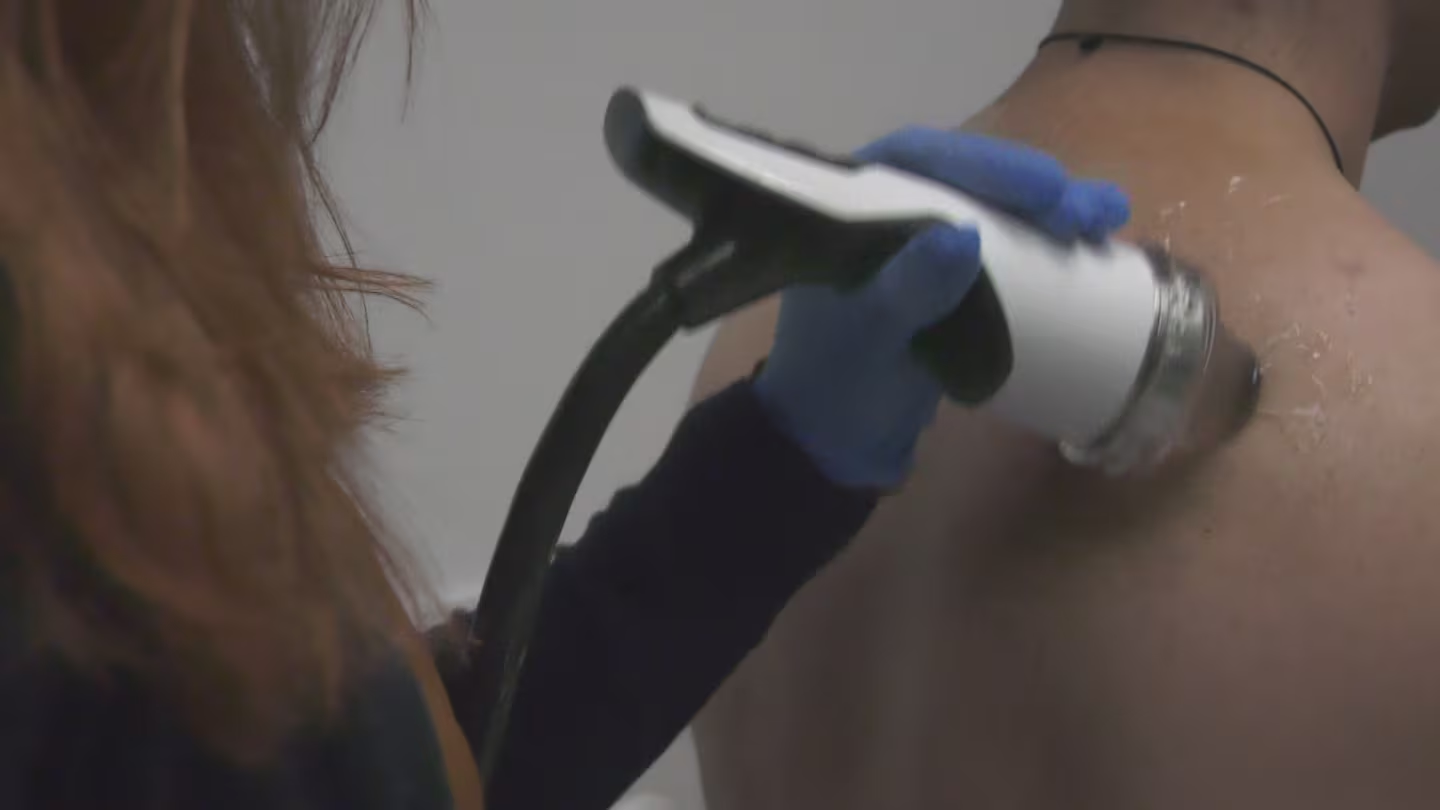
The coverage of Yaassoub’s shockwave therapy treatments is about to change, however. Veterans Affairs Canada, which had been fully covering the treatments for pain related to musculoskeletal conditions and erectile dysfunction since 2017, announced last month it’s limiting the number of them per veteran to three per lifetime starting next month.
It also said it would cover shockwave therapy treatment just for chronic tendinopathies – which are types of tendon disorders that result in swelling, pain and poor function – and not for erectile dysfunction.
A department spokesman said the department’s benefit review committee changed the policy for veterans to limit the treatment to those with chronic tendinopathies because “the evidence in support of extracorporeal shockwave therapy is very limited and weak,” referencing findings by Canada’s Drug Agency and the Canadian Urological Association.
“This recommendation was made following an extensive review of the latest health and medical guidance, and as part of our mandate to ensure veterans receive safe and evidence-based medical treatments,” Marc Lescoutre, a media relations representative for Veteran Affairs Canada, told CTV News Edmonton in a statement.
Lescoutre said 567 veterans have been reimbursed for shockwave therapy since 2022, adding the average rate for one session is $365.
Igor Gimelshtein, the head of a company providing healthcare services that include shockwave therapy to Canadian military and RCMP veterans, says the policy change “is unhelpful.”
“It is like starting a surgery and not finishing it,” Gimelshtein, the chief executive officer of Echelon Wellness, told CTV News Edmonton.
He claims that the treatment is safe and effective, and that the International Index on Erectile Function says 65 per cent of patients receiving shockwave therapy for erectile dysfunction “experienced clinically significant improvements.”
“If 65 per cent of patients are getting statistically and clinically significant improvements, then you know the numbers speak for themselves,” Gimelshtein said.
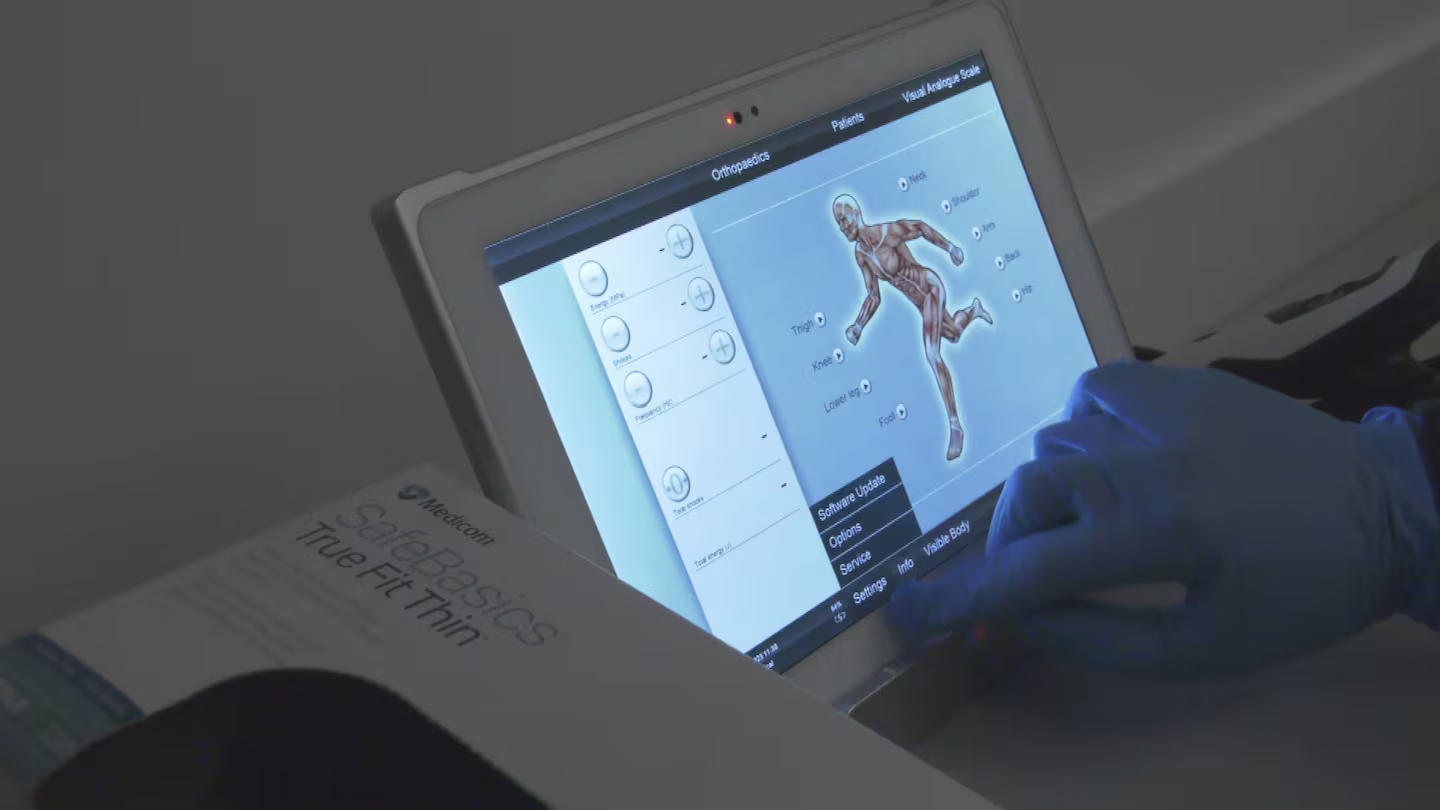
Echelon Wellness opened its first clinic in Bedford, N.S., 18 months ago and already has six locations across the country, including one in Edmonton’s Castle Downs neighbourhood that opened in September. Gimelshtein says his clinics have served more than 4,000 people.
He said while Echelon isn’t the only firm that offers the treatment to veterans, “we have a disproportionate number of them that do get shockwave therapy,” and urges Veterans Affairs Canada to reverse its decision.
“They’ve been covering it for eight years,” Gimelshtein said. “Veterans say it works for them, and there’s no reason it should be taken away.”
Yaassoub agrees, saying it feels like “a miss.”
“They must have missed something or failed to really consult the veteran community on how effective this treatment is on our bodies,” he said.